
Another word for Joy
Happiness is a cabinet full of cereal boxes. Speaking of which, paid subscribers can dig down to the bottom of this post for a special prize. (And anyone can become a paid subscriber for any price.)

“For some people happiness comes easily. For more of us, we need to be active participants in the quest to attain it.”
—Tzivia Gover, Joy in Every Moment
Hello Dear Reader,
Back when I worked as a newspaper reporter, I only remember one time that I heard the iconic cry, “Stop the presses!” The excitement of the moment stays with me all these decades later, but not the reason for the dramatic last-minute change.
Tonight I experienced the Substack equivalent. In this case it entailed rushing home to make a last-minute change to this post, which was necessitated by a synchronicity that I couldn’t let go un-remarked upon. (Those of you who read This Dream is a Poem, my other online publication, know how much I love a good synchronicity.)
So, enjoy everything I’ve packed in here today, including a confession about being a grumpy self-help writer, some ancient wisdom about Jewish joy, a last-minute synchronicity, and a special gift tucked inside it all, like one of those prizes we used to dig out from the bottom of the cereal box.
I hope you enjoy reading this post as much as I delighted in writing it.
Those not-so-joyful moments
On days when I was short on patience and high on irritability, my daughter would say,
“Mom, you need to sit down and read your book.”
She meant one of the inspirational self-help books I’ve written, including Mindful Moments for Stressful Days and later, Joy in Every Moment.
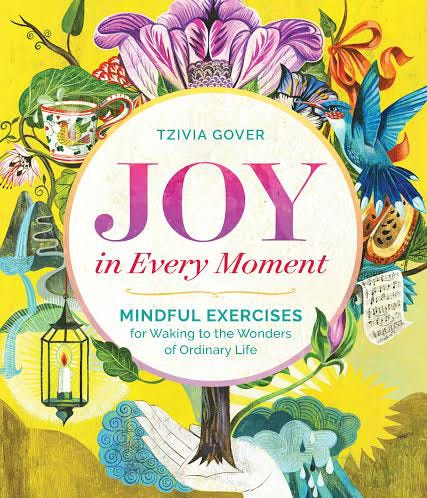
Because I’m the author of books on everyday happiness and as a dream teacher whose workshops have titles like “Dreaming Toward Bliss,” people (including my family members) get the impression that I should live in a state of perpetual peace and equanimity.
And yet I have plenty of days when I’d be wise to take my daughter’s suggestion and take my own advice.
I make no secret of the challenges I face on the way to becoming a more positive person. In the opening paragraphs of Joy in Every Moment I describe telling my then-partner that I had no happy memories from childhood. Not one.
But she wasn’t buying it.
Thinking I could prove to her how terrible my upbringing really was, I began spending a little time each night before bed trying to recall even one small, good memory from childhood.
Inspite of my stubborn insistance, the good times began to themselves, first as bits and fragments: a favorite tree in my grandparents’ yard, new school shoes each fall, a kitchen cabinet crowded with boxes of sugary cereal with hidden prizes tucked inside.
I soon amassed an impressive collection of pleasant and even happy memories, and I began looking forward to those nightly moments of reflection.
Without erasing the difficult parts of my early years, this simple exercise helped me restore goodness to them.
“Seeing the whole picture, not just selected scenes, helped me to be fully who I am. Healing is the process of becoming whole.”
—Tzivia Gover, Joy in Every Moment
I am hardly the first self-help author who has needed to take their own advice.
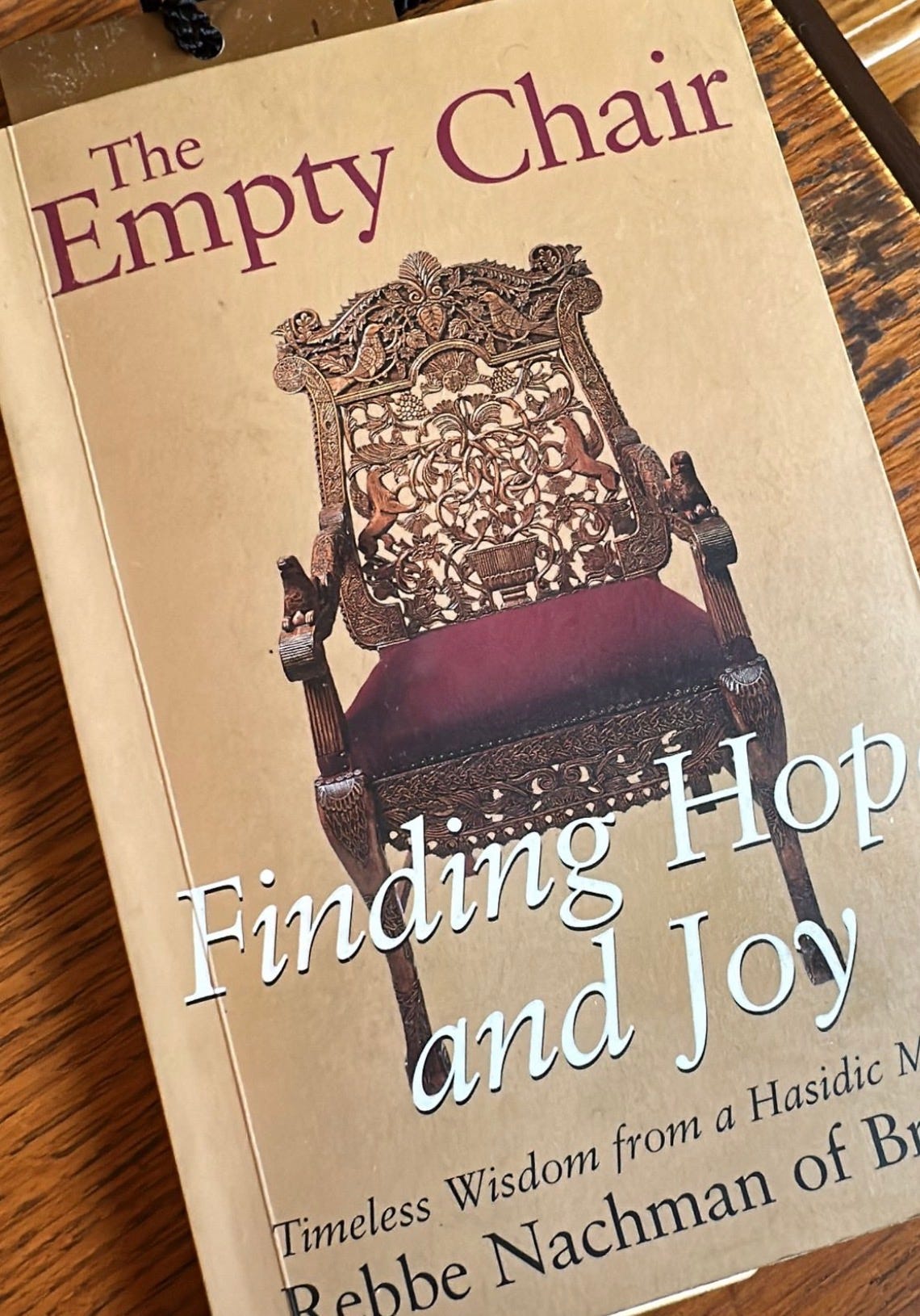
One of my favorite page-a-day readers is The Empty Chair: Finding Hope and Joy, which contains the teachings of Rebbe Nachman of Breslov. I trust this book because Nachman, who struggled with depression, lived what he preached. He wrote:
“Struggle with all your might to only be happy at all times. Since it is natural to be drawn into sadness.”
R. Nachman (1772–1810)
For Rebbe Nachman joy was not naïve cheerfulness, but the result of the conscious work of turning sorrow, fear, and discouragement into something life-giving. A sustaining happiness, in this view, requires intention, discipline, and spiritual orientation.
The acknowledgement of life’s inherent difficulties within spiritual teachings about happiness proliferate in Jewish teachings—and Jewish music, too.
Klezmer music, for example, offers a sonic tapestry of the Jewish soul with its mix of upbeat melodies, plaintive wails and irrepressible rhythm.
The Hebrew word simchah (joy) seems rooted in this brand of gladness that can emerge from the shadows of loss and heartbreak. While in English, the word happiness is related to happenstance, suggesting that our well-being depends largely on our individual circumstances, simchah, joy is often expressed in communal and spiritual contexts: rejoicing together, serving God, and celebrating blessings.
Think yourself happy
According to one teaching, because the word b’simchah (in joy) shares the same letters as machashavah (thought), we can infer that thinking and joy are connected. Mindfulness practices echo this insight. To the extent that we can loosen our grip on destructive thoughts and redirect attention toward more life-giving ones, we can shift our emotional lives as well.
Simcha for all
In more universal terms, simchah points toward a kind of joy rooted in connection and purpose rather than personal fortune.
Practices like gratitude, generosity, acts of justice and healing are ways to cultivate joy, even amid difficult circumstances.
Simcha and synchronicity 💫
This missive was already in the queue to send out when I realized it would land in your inbox on Shavuot, a holiday on which it’s customary to study all through the night, and to eat dairy treats, especially cheesecake. But I didn’t feel I had a ready-made tie-in to the holiday, so I was prepared to let it slide.
Then, when I arrived at synagogue, I discovered that the theme for our community’s study sessions would be emotions, including shame, anger, grief, and so on. The post I’d already written about joy fit right in. After all, in Chabad tradition people say “kabolas hatorah b’simchah ubepnimiys,” to invite joy and sincerity into their Shavuot observance.
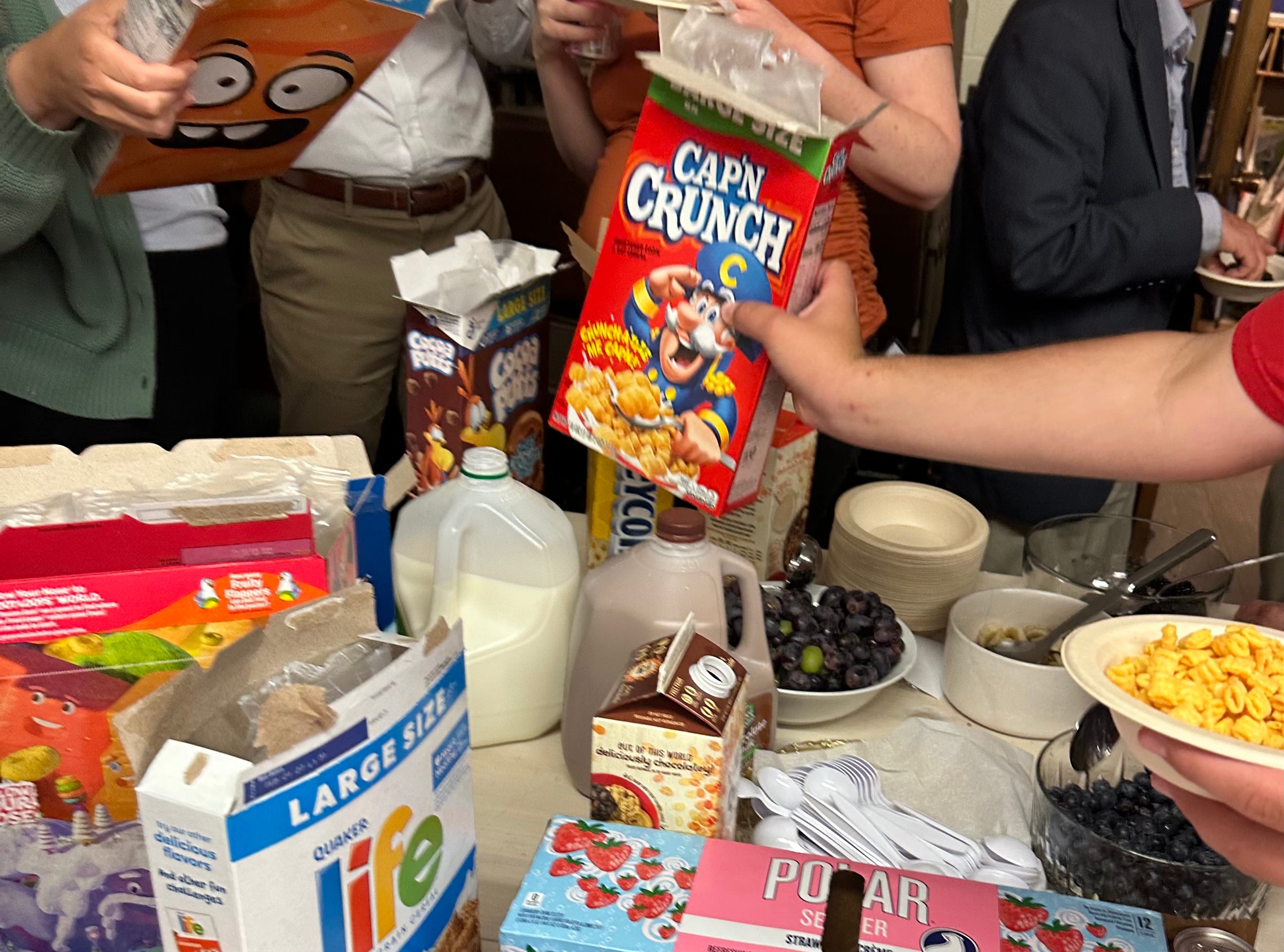
Then it got even better. In addition to serving the traditional cheesecake, members of our community had set up a cereal bar, too!
Suddenly today’s post with its focus on joy and its cereal theme made it seem as if it had been planned for the occasion!
What’s Joy got to do with it?
What does all this have to do with The Life of H and my poetry and translations about Sarah?
The word simchah does not appear in Sarah’s story, and yet Sarah is closely associated with laughter, beauty, pleasure, and spiritual devotion. Surely she knew something about joy.
More than that, The Life of H emerged from my joy in studying Jewish texts and from my desire to share the creativity, wisdom, and humanity I find in the process.
This project grows not only from intellectual curiosity, but from delight.
This post is part of a series exploring my relationship to joy as shaped by personal experience and Jewish thought, which I’ll share here and in This Dream is a Poem. And remember, when you become a paid subscriber to one of my publications, you automatically get three months of paid subscriber access to the other, too.
For a pay-what-you-can subscription, click here.

The prize at the bottom of the box
Below you’ll find your free copy of ‘Five Rules on the Road to Happiness’ from Joy in Every Moment. This freebie is a thank you to paid subscribers.
If you are not yet a paid subscriber, upgrade today to enjoy the bonus. Plus, for annual paid subscriptions you get a free, signed copy of my book Dreaming on the Page, too!
Here’s how to claim your gift:
